
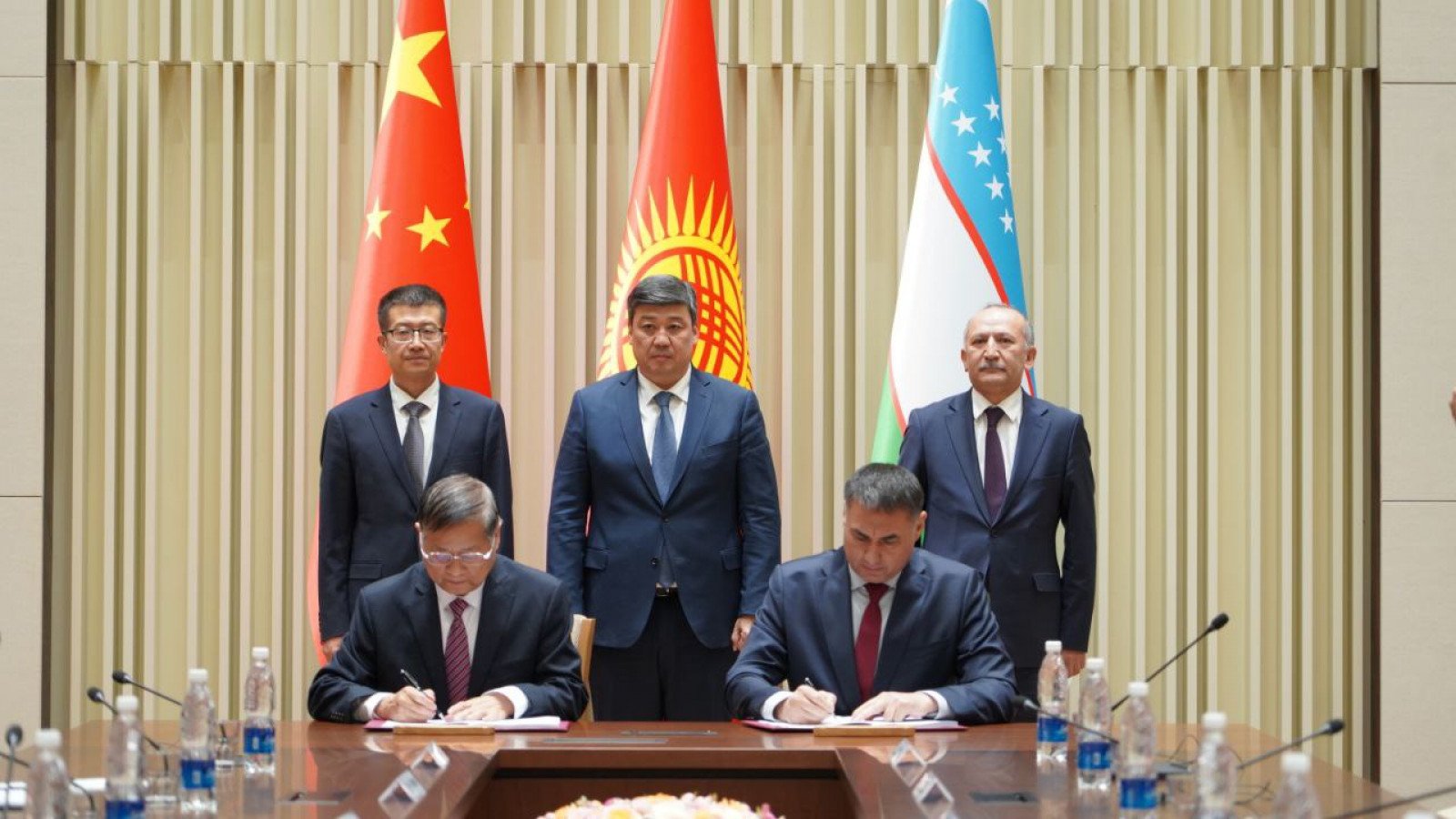
 (Photo: Cabinet of the Ministers of Kyrgyzstan)
“The project of building the China-Kyrgyzstan-Uzbekistan(CKU) railway, which has remained on paper for decades, will finally be implemented. Construction will officially begin on 27 December,” Kyrgyz President Sadyr Japarov said at the People’s Assembly in Bishkek.
The railway will serve as a strategic bridge between East and West, opening up new opportunities for trade, tourism and industry, he said.
In addition, the opening of the Bedel checkpoint on the border with China will strengthen Kyrgyzstan’s transit potential, speed up cargo and passenger traffic, create new business opportunities and boost trade with key partners, he said.
“Bedel demonstrates our pragmatic approach to transport infrastructure development and integration into the global economy. This is another step in Kyrgyzstan’s transformation into an international transport hub,” Japarov said.
Kyrgyzstan ratified the railway construction agreement with China and Uzbekistan on 27 June. According to the agreement, the China-Kyrgyzstan-Uzbekistan railway will pass through Kashgar (China), Torugart (on the Kyrgyz-Chinese border), Makmal (Kyrgyzstan), Jalalabad (Kyrgyzstan) and Andijan (Uzbekistan).
On the 21st, local media in Kyrgyzstan reported that the Kyrgyz government had signed an investment agreement with the CKU Railway Company Limited. The agreement covers the design, construction, financing, operation and maintenance of the railway project.
The Kyrgyz side said that the negotiation process of the agreement was long and challenging, and it is one of the most important basic documents of the whole project. Thus, the last piece of the puzzle in the implementation process of the CKU railway project has been completed.
The CKU Railway Company Limited was established on 26 July this year and inaugurated on 28 September.
Experts estimate that this railway will carry up to 15 million tonnes of freight per year. The delivery time to end users could be reduced by seven days compared to current routes. Transit and logistics infrastructure, warehouses and terminals will be created.
The preliminary cost of the railway project is estimated at around $8 billion.


